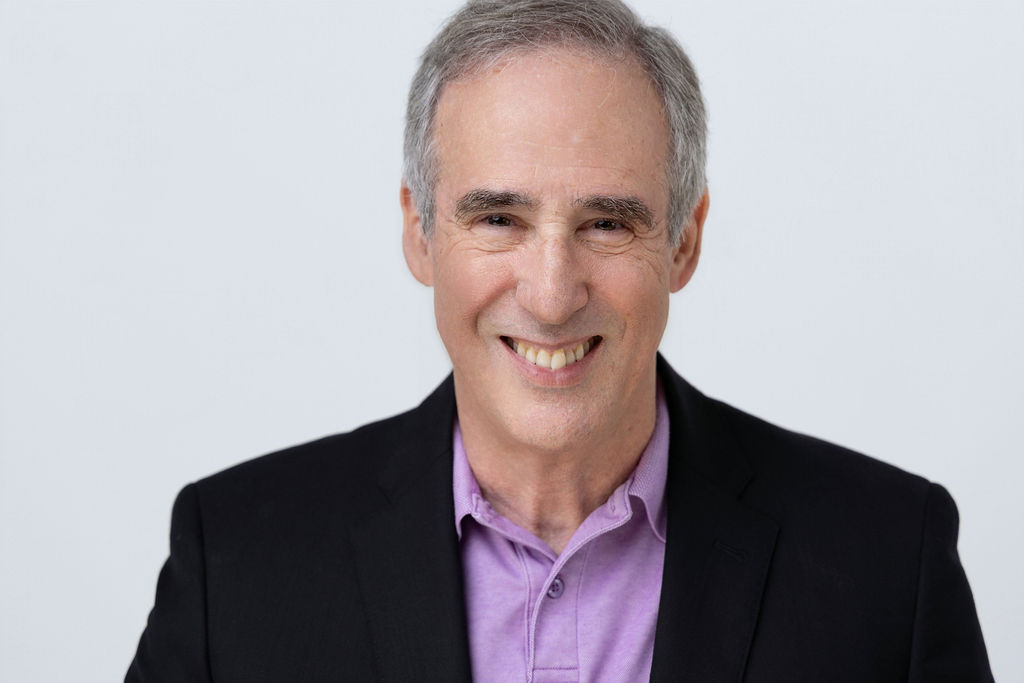
Mike Wittenstein. Independent director candidate for private companies of $50 million to $2 billion in revenue that are at an inflection point. Most boards do what they were designed to do: hire and evaluate the CEO, allocate capital, review results, manage known risk, protect what exists. The risks that matter most form outside the metrics a board routinely reviews: shifts in customer behavior, emerging technology, talent making different choices.
By the time they appear in a quarterly report, the options available to leadership have narrowed, sometimes irreversibly.
I am a candidate for private-company independent director seats. This would be my first paid fiduciary board position, and I would rather you hear that from me than find it out.
I have held fiduciary duty once, unpaid, at FullCircle, a nonprofit I co-founded in 2021. I served on its board through 2026 and as its executive director from 2022 to 2025, and set up the board’s governance. The board grew from three directors to seven, met four times a year, and had no committees. The hardest vote was dissolution. I voted for it, and the vote was unanimous. Our funding came mostly from one source, which a public charity cannot sustain under IRS rules, and our own research showed that more people would fund the work if it could offer them a return. We handed leadership to a representative of the community we served, wound the organization down carefully, and a for-profit successor is now being planned. The executive director who succeeded me will take a chair’s call. What I learned there about a board: diversity of thinking yields better decisions.
Seven years on the advisory board of Georgia Tech’s graduate program in human-computer interaction (2013 to 2020). Certified in Private Company Governance by the Private Directors Association. Behind that, 30 years advising the CEOs and leadership teams whose plans boards approve: at Storyminers since 2002, and before that at IBM and at a digital agency I co-founded and ran.
Boards do not need to abandon discipline. They need to apply it forward.
The difference shows in the room. A professional services firm’s board had to decide whether to build or buy its practice-management software. I took the board from an abstract discussion of the two options to a walk-through of a single Tuesday morning eighteen months out, when a client’s consulting team, spread across three time zones, has to coordinate a transformation project with technology that does not yet exist. That conversation surfaced real requirements and showed where systems, incentives, and culture would break, while acting was still cheap and the choice was still open. A second board, at ShineWell, an innovative healthcare support startup, took the same walk and went from a passion project to a real business opportunity.
Not prediction: a plausible future made specific enough to evaluate, while the choice is still open.

From Oversight to Foresight: a board’s work in an age of AI
AI multiplies the options in front of a board, not the quality of its judgment. Three questions, one rule, and five things a board can hold management to. Every claim footnoted.
Asking them is most of the work, and a board does it best together, out loud, while the answers can still change what the company does and how it does it, not just how it reports it.
The rule on technology: AI increases the speed at which options appear, not the quality of judgment. The board’s job is to know which questions matter, which trade-offs are acceptable, and where accountability sits. Tools inform. People decide.
The first two quarters are for listening: the pre-reads, the recent board packs, and, with the CEO’s agreement, a conversation with each director and each of the CEO’s direct reports, so that I understand what the board already sees, and what it is working on, before I add anything. When it fits, and with the chair and the CEO knowing, I shop the business myself as a customer, to see whether the brand’s promises are being kept and where value is being left on the table.
Between meetings, my practice would be a one-page note to the chair before each meeting, when there is something worth the board’s time, and only then. It goes to the chair, not around the chair, and to the CEO when the chair asks. I do not direct management, and I do not call management between meetings unless the chair has asked me to. I take the committee assignment the chair gives me; strategy, growth, and technology, including AI, are where I add the most. I read and understand financial statements; I am not the board’s financial expert, and I would not be its audit chair.
When the board decides against my view, I say so once, in the room, and support the decision outside it. In executive session I tell the chair what I think the board is not seeing, and let the chair decide what goes to the CEO.
If I sit on your board, I am a director, not a vendor. Storyminers does no paid work for a company whose board I serve on, or for its direct competitors, while I serve. I would hold no more than three seats at a time, for terms of two to five years.

Thirty years advising the CEOs and leadership teams whose plans boards approve: McDonald’s, IBM, TELUS, Transitions Optical, and private companies from $10 million up, many of them family-run.
A consultant’s number, not a director’s, and here is how to read it: that work has contributed to $3.2 billion in documented client value. Source ↗ Most of my record is a consultant’s, and a consultant’s results are measured in the client’s outcomes, with my hands on the work. A director’s record is measured differently: in the company’s outcomes, reached through influence rather than hands, with the credit belonging to management and the whole board. Noses in, fingers out means exactly that. I know the difference, and this page keeps the two apart.
The professional services board from the perspective section, deciding whether to build or buy. I wrote the firm’s future out in detail, as a document the directors could read and walk through: the clients, the operation, the numbers, not a slide of abstractions. The room slowed the commitment before it locked in: the board chose to buy the software rather than build it, with certain customizations, and the firm kept both the capital and the choice. That is what foresight buys. Sometimes it is the expensive mistake that never happens. Just as often it is the larger opportunity, seen early enough, that would otherwise have gone unpursued.
The most recent work at a board’s altitude was a generational handoff. In 2024 and 2025 I advised the incoming CEO of a midsize, family-owned commodity trading company in Europe through the transition from one generation to the next, one to one with him, not with the board: organization design, strategy, people working with AI, and governance. The name is withheld at the client’s request.
Closer to most private boards in size: Alternative Apparel, a founder-led apparel company with sales then under $100 million. The founder, an engineer at heart, cared about the product: the fabric, the cut, the hand of the material, the way it felt to the touch. He had brought his leadership team and his whole staff into one room to talk about the company’s future, and he opened with the product. His people saw something else, and had been holding it back. The people buying were no longer buying a shirt. They were buying the experience of wearing it.
I asked him to leave the founder’s chair for a few minutes and sit in two others, first as a customer walking into a store, then as a buyer at wholesale. Then I asked the room whether the quality of the material was what their customers cared about most. The answer was no, and once one person had said it, the nodding around the room gave everyone else the permission to speak.
What followed was the real conversation: whether the hand of the fabric, the thing he was proudest of, mattered most to the retailers who wrote the big orders, or to the person who would wear the shirt, from whom all of the demand came. It was not the making of the shirt. It was the wearing of it. He understood that the business belonged to its customers, not to him. The company reorganized around the wearer; it grew, and was later sold. The work ran at a board’s altitude; the board itself was not in the room.
Toward a sale, as with iPay Technologies, a payments company positioned through its growth to its exit; for an investor’s portfolio companies, as with CEO Ventures, where one was repositioned for a higher-than-expected multiple at sale; and toward the next generation.
MPI (2017), the international association of meeting and event professionals, the international board’s strategic planning. PartnerTech (2013 to 2017), a contract manufacturer built for fast-changing production and inventory demands, two multi-year planning engagements with the international leadership team, board members included. Maier America (2014 to 2016), the sales, distribution, and repair arm of a German maker of rotary bearings for specialty manufacturing, marketing and service initiatives with the US managing director and board.
The industries I know from the inside: retail and multi-location businesses, healthcare, manufacturing and distribution, technology, hospitality and travel, professional services.
Board and advisory work is confidential by nature. What a board or a leadership team shares with me stays in the room, and the record on this page names only what clients have agreed to have named. Source ↗
Private companies at an inflection point: AI moving into the business, a new market opening, a change in what customers are promised, a founder whose plans are larger than what the company can yet deliver, or the generational handoff, where the work is honoring the legacy of the exiting generation and bridging it to the foundation for the next generation’s vision of the future. Often founder-led or family-owned; sometimes private equity that keeps the family or the founder in the business. Where I would serve: strategy, growth, and technology, including AI.
I am not the right fit everywhere. I am not an audit, risk, or compliance specialist. I am not an AI implementer; I do not pick vendors, build models, or run a program office. And I am not an operator looking for a seat to run things from. Not the right seat: a distressed turnaround or a regulated public company. If that is what your board needs, I will take myself out of the running.
If this describes your board, the next step is an hour’s conversation.
The old board saying is the standard. Governance and strategy are the work; operations belong to management. Keeping that boundary clean is part of what makes an independent director useful.
No pitch. No deck.
We find out whether the problem in front of your board and my judgment fit. If they do, we talk about what a seat could look like, including the time commitment. Four people who have watched me work at a board’s level, two CEOs, an investor, and my FullCircle co-founder, will take a chair’s call; names on request.
Start the conversationPrefer to write or call? Email mike@storyminers.com or call or text +1 404.229.5809.
The one-page board bio: Download the PDF. The two-page board resume: Download the PDF. More of the record: Read the full stories →