Make your story stick.
An evening about the difference between where you’ve been and where you’re going — and why only one of them is a story.
Replay the deck from the night
Everyone in the room had an idea they could explain. That was never the problem.
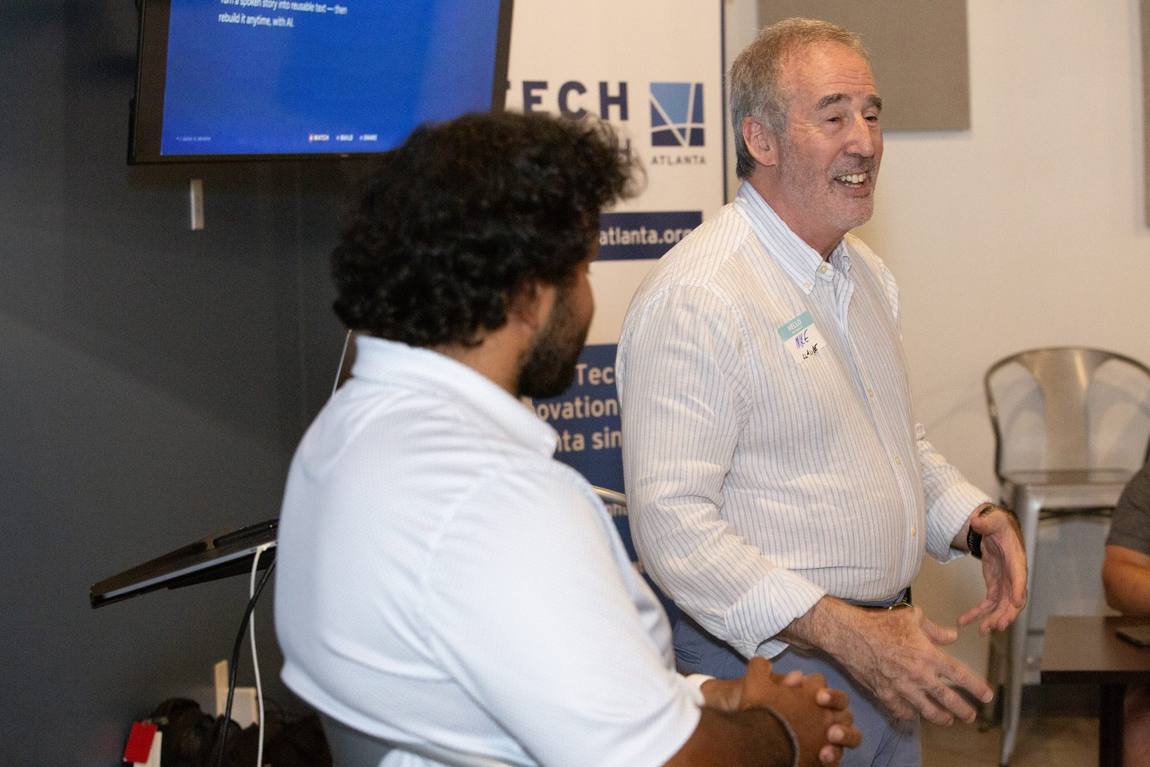
The problem was that most of them were explaining where they had been. A story that works points the other way — at the specific problem you are solving next, and who it is for. So two people — Sreyas Gentela and Jennifer Peters — took a seat up front, said their piece, and had it turned around in public. The distance between what was said and what the room actually heard is the whole evening.
it already slid off.
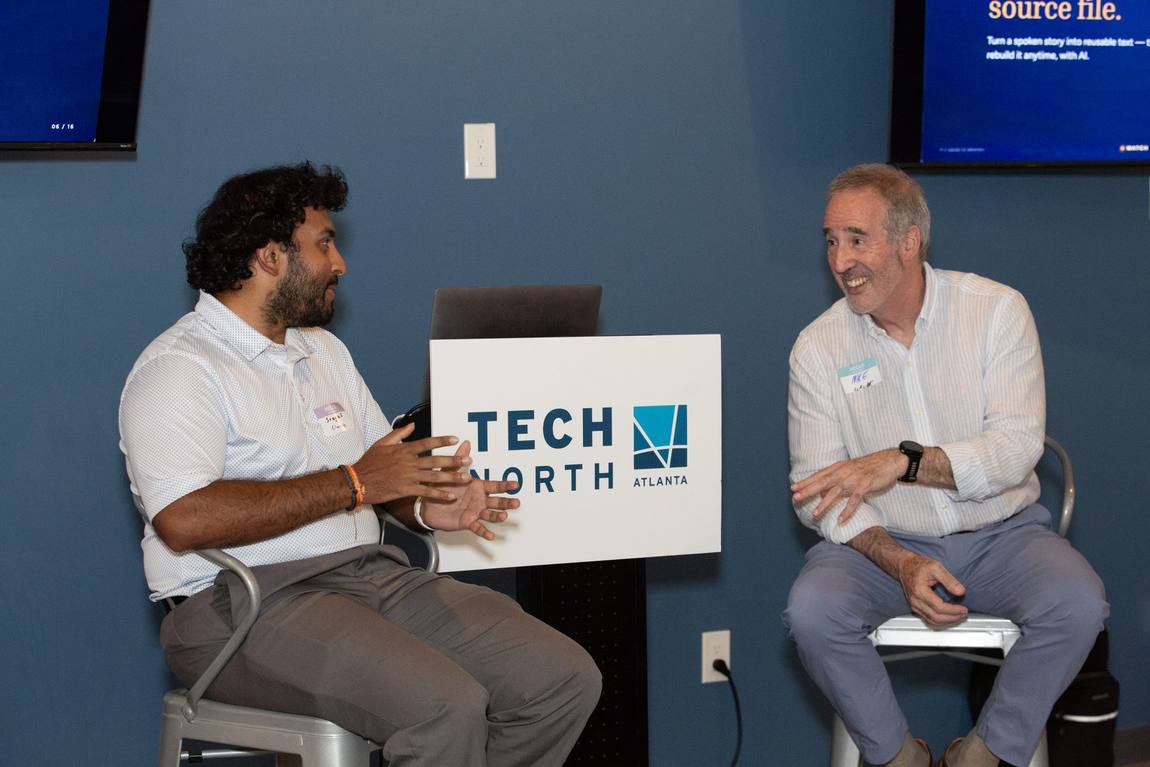
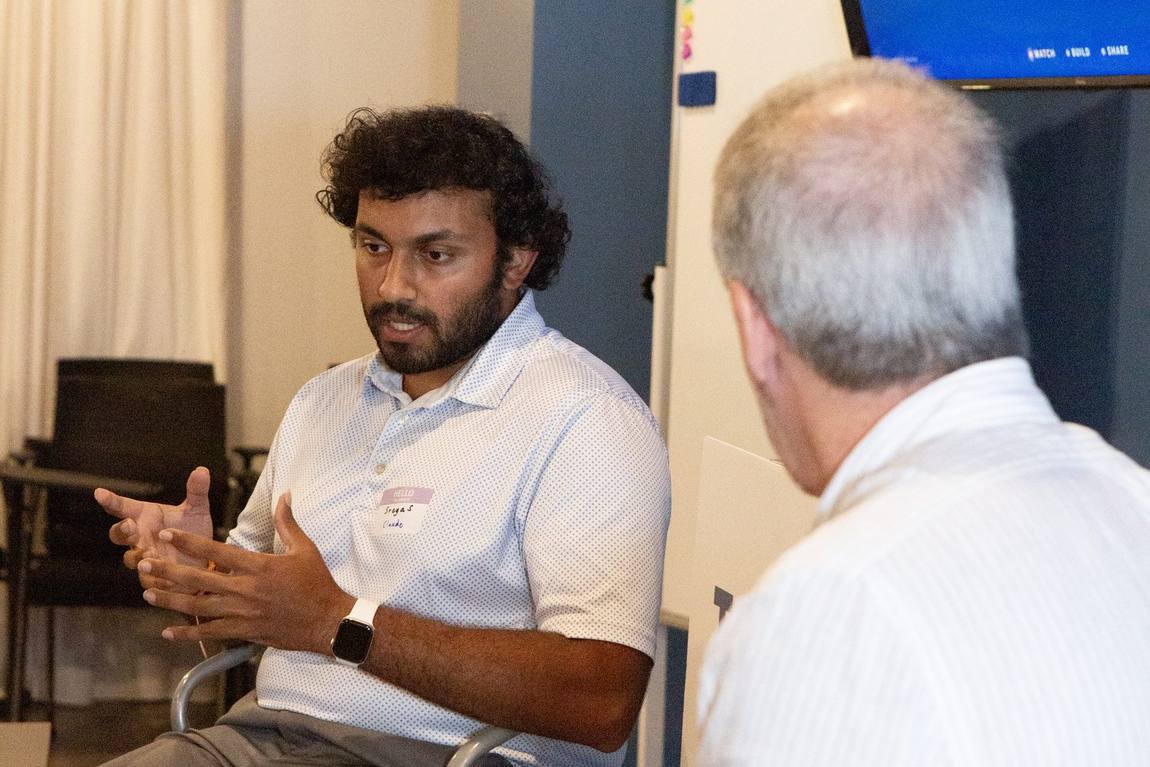
Sreyas Gentela described a platform for teaching AI literacy — accurately, and far too technically. The room said so. The fix wasn’t a better feature list. It was one distracted third-grader, and what it would feel like to get through to them. Same work, aimed at a person instead of a spec.
source file.
Here’s the part most people miss. The story you just said out loud is not a pitch you memorise — it’s a file you keep. Anchor your AI in it, and the decks, the site, and the emails all start sounding like you instead of like everyone else.
it’s what you do with it.
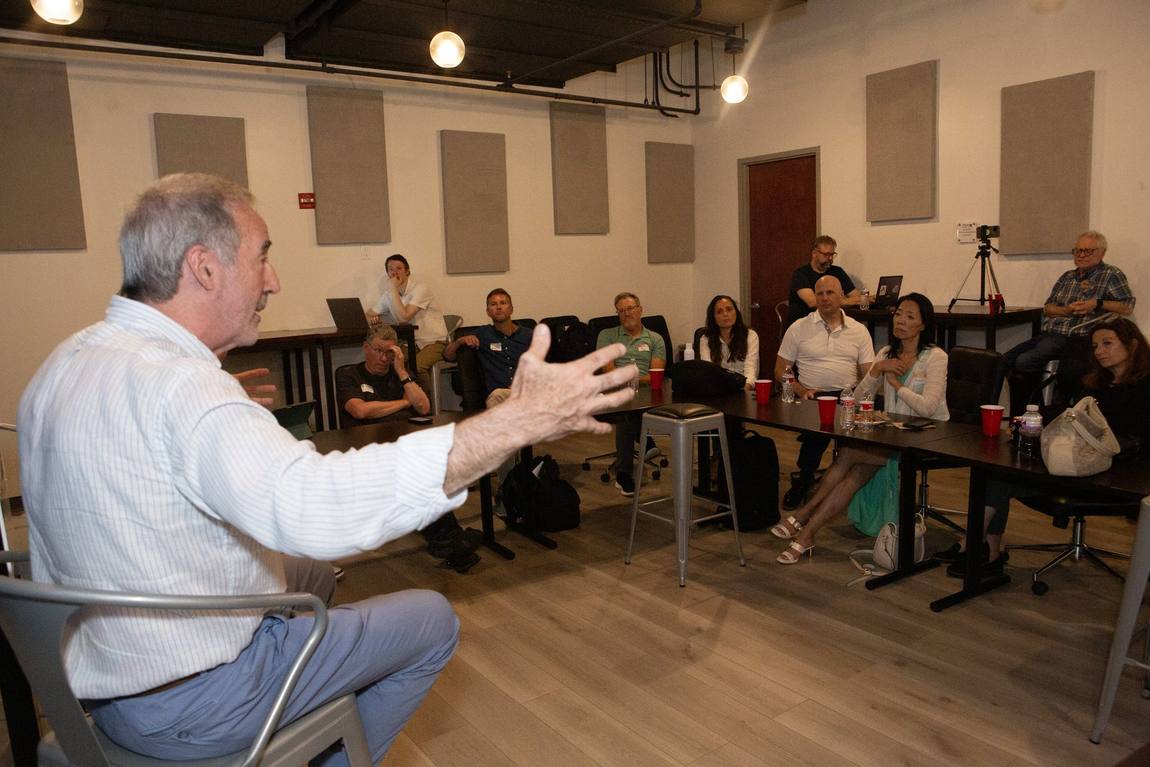
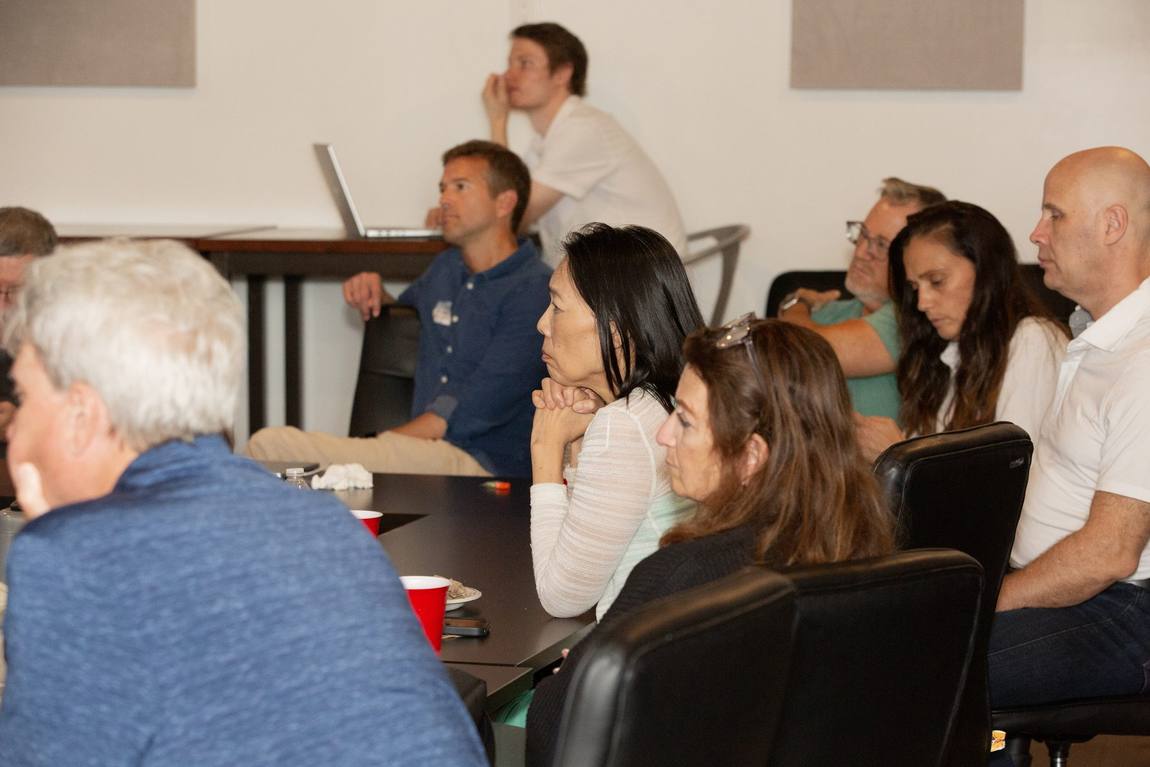
Jennifer Peters works in digital accessibility — screen readers, and what AI-written code does to people who depend on them. True, and hard to feel. Said the other way round, it’s helping blind people see what the rest of us see on a screen. Nothing about the work changed. The room’s posture did.


Jennifer’s, in her own words.
Five days later she wrote this down, unprompted. It is the whole evening in one email.
Sitting down
I was really struggling to explain what I do, because most people don’t understand what it is. I also didn’t feel super confident because I’m newer to the field, and self-edit. I still sputtered a lot after my hook.
What she wrote when she got home
“Do you know how blind people navigate the web?”
They use their ears to see — a screen reader reads them everything on the page. But what the screen reader sees and what we see can be very different. Digital accessibility work closes that gap: auditing websites and digital material so that what we see matches what a screen reader conveys to someone who cannot see the site.
“I used it the next night at the match-maker thing and got some great conversations.”
Three things to carry.
Your story is not about you
It’s about the person hearing it. Aim for the feeling you want them to have, not the list of things you want to say.
Be your client
What are they afraid of? What do they have to believe before they’ll move? Meet them where they are, not where you wish they were.
Emotion first, logic second
Put it in an emotionally powerful order, not just a logical one. Logic tells people what to think. Emotion tells them what to do.
Worth keeping.
“Brands make promises businesses keep them.”Don’t make a promise with your brand that operations aren’t ready to keep. That’s a recipe for long-term disaster.
“These days, everyone’s wearing Teflon.”Pitches, posts, introductions — most of it slides right off.
“Most companies’ first year with AI left them busier, not better.”He took the hot seat himself at the end, with his own line.
The method, in four moves.
Get interviewed
Ask someone to interview you about your idea for twenty minutes. Don’t prepare. Just talk.
Capture every word
Record and transcribe it — yours and theirs. The interviewer’s questions matter as much as your answers.
Hand it to an AI
Paste the whole transcript in and ask it to find the story. Then push back, revise, and go again.
Say it out loud
Try the new line on a real person. If their face changes, you have it. If it doesn’t, go back to step three.
If you’re the interviewer
- Ask “what problem does this solve?” — then keep asking it differently.
- When they list features, ask “why does that matter to the person paying?”
- Listen for the surprising thing they say. That’s usually the real story.
- Push on jargon. If you don’t get it, neither will their audience.
- Ask “if this works, what changes?” — that’s the ending they need.
Paste these in after your transcript.
Run them in this order. Each one does a different job, and the later ones only work once the earlier ones have. Push back on every answer — the first one is never the good one.
Hear it back
Point it forward
Aim at one person
Find the metaphor
Be my client
Reorder for feeling
Judge me, before and after
Keep me honest
The one-pager from the night — now with the prompts on the back.
Get the story right.
Thanks for a good evening.